5 posts tagged with "cli"

View All Tags

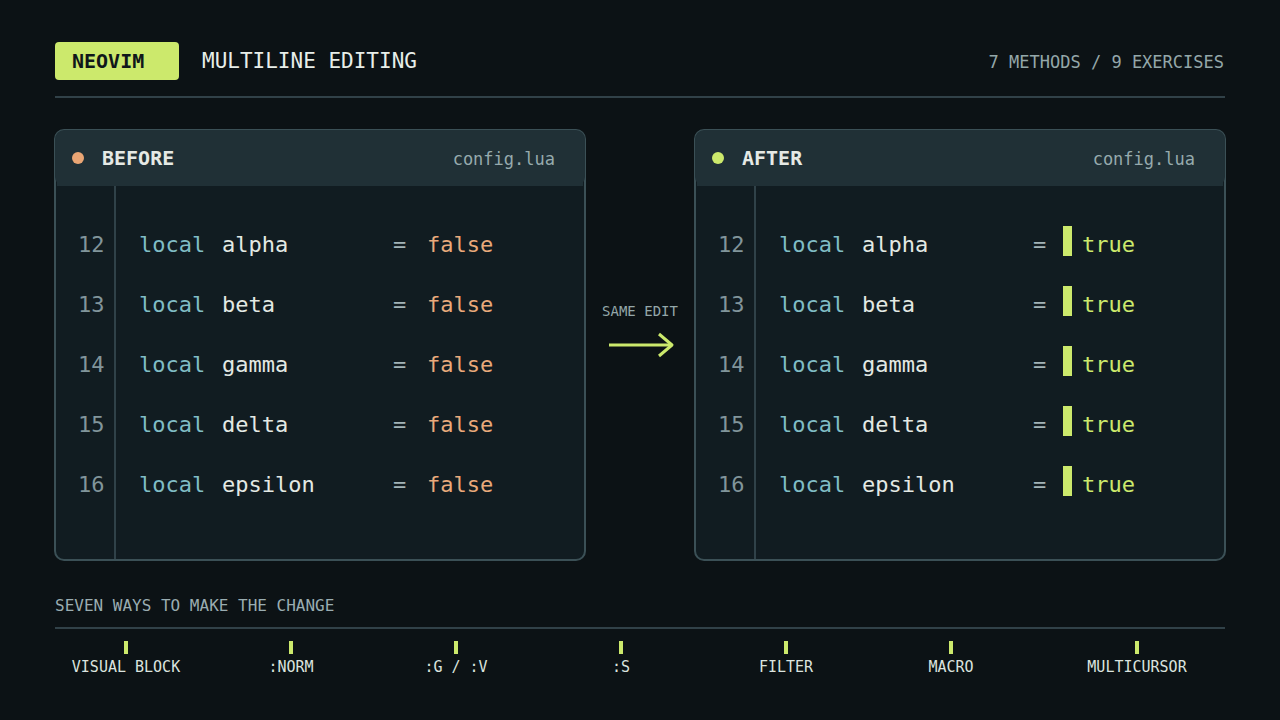
Seven Ways to Edit Many Lines in Neovim, Scored in Keystrokes

· 11 min read

Cursors sitting at the same spot on every line of a terminal editor

Sooner or later you make the same small edit on line one, then line two, then line three. Neovim has had several ways to avoid that loop for years, and a newer one arrives with 0.13: built-in multicursor. This post walks through each method with a small example, covers multicursor in depth, and ends with a rule of thumb and a keystroke count for nine exercises. Multicursor is available only in nightly builds until Neovim 0.13 ships.

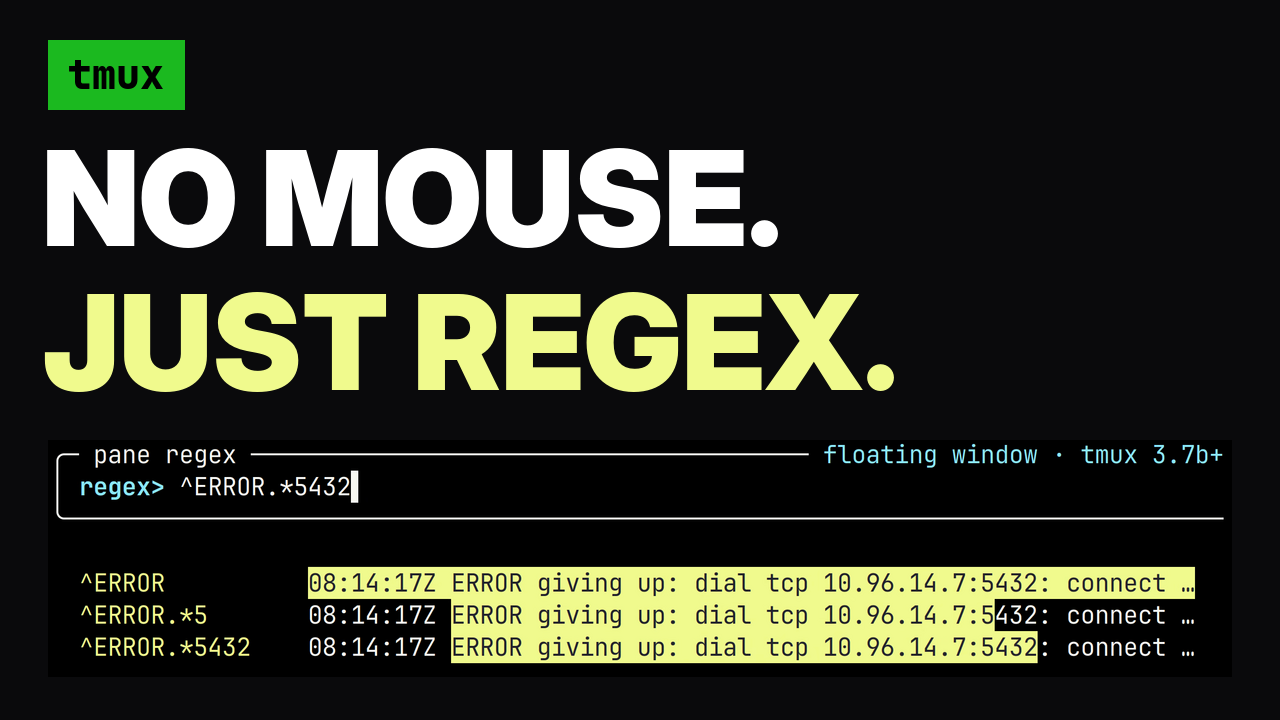
Paste tmux Scrollback by Typing the Words You Remember

· 9 min read

tmux pane regex picker highlighting an error in scrollback

The text you need next is usually already on your screen. A pod name three commands back, the error string you want to search for, a URL a tool printed, the long flag you typed twenty minutes ago. Getting it into your current prompt means reaching for the mouse, and the mouse gets it wrong: a soft-wrapped line comes back with a newline in the middle, and a newline in a shell paste runs the command. This post covers a tmux plugin that selects the range by the words you remember, shows you the selection in the real pane while you type, and pastes it without submitting it.

Stop Holding Arrow Keys (Fuzzy Jump to Any Word on Your Command Line)

· 5 min read

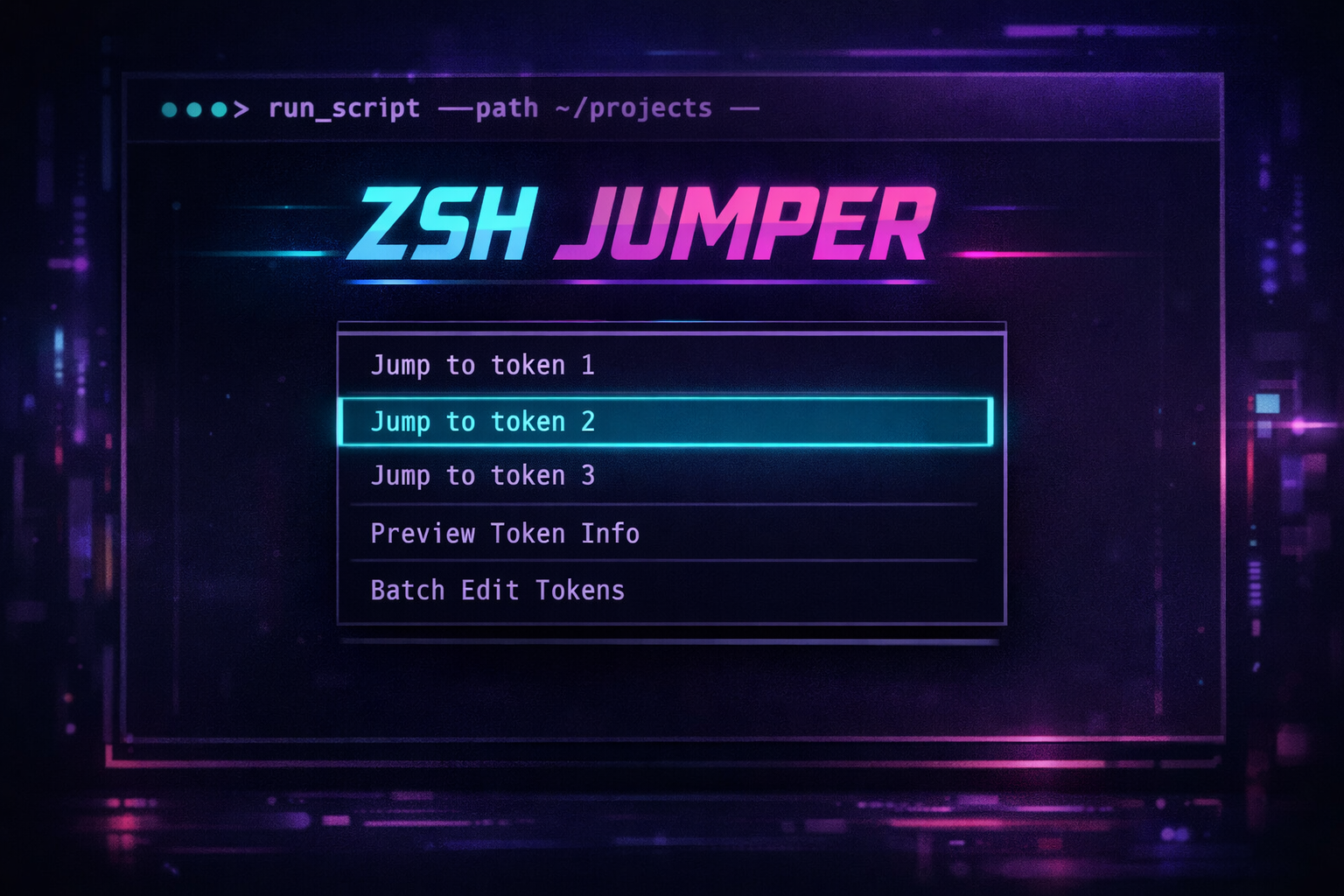
zsh-jumper

You've typed a 10-word kubectl command. You realize the namespace is wrong. Now you're holding Ctrl+Left six times to get there. Or worse, reaching for the mouse.

Vim solved this for text editing decades ago. Why are we still navigating command lines like it's 1985?

zsh-jumper brings fuzzy search to command line navigation. Press a key, pick a word, cursor jumps there. Or press ; and a letter for instant EasyMotion-style jumps.

Portable Kubernetes Management With Kubectl in Docker Container

· 7 min read

Image by Julius Silver from Pixabay

Portable Kubernetes management with kubectl in Docker container​

Saying that Kubernetes is becoming mainstream would be an understatement. In fact, it has influenced how modern distributed systems are designed and operated. By abstracting away infrastructure concerns we are able to leverage Kubernetes as a “platform to build platforms” or “cloud operating system” with lots of obvious benefits, but also development and operational challenges.