Deeply technical talks driven by live demos and real-world experience. Hands-on, honest, and pragmatic - aimed at practitioners working with Kubernetes, infrastructure, and AI.
./favorite.sh// Sessionize profile
Curl a GPU Into Your Cluster: Hybrid Kubernetes for AI Development
Curl a GPU Into Your Cluster: Hybrid Kubernetes for AI Development
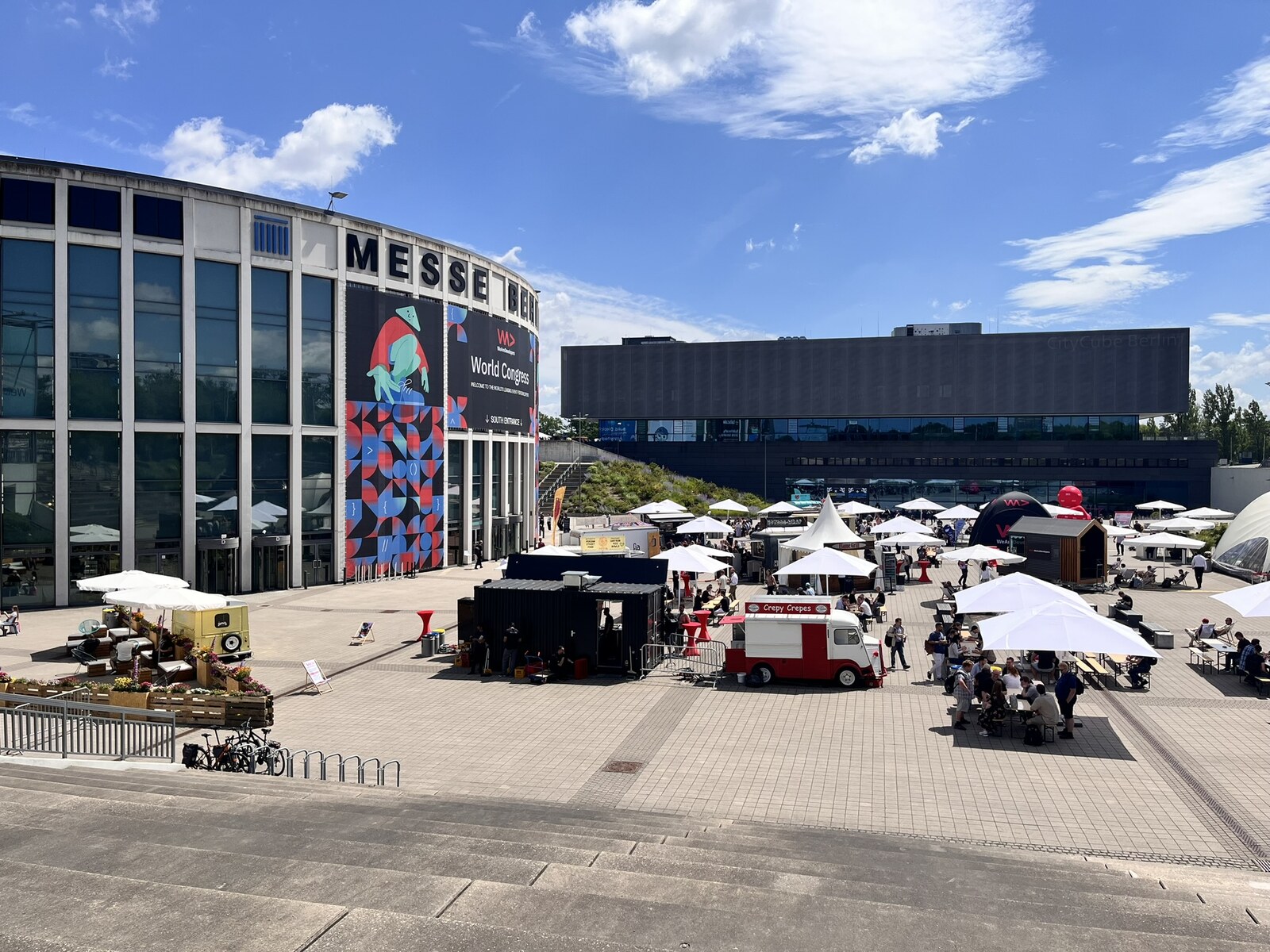
Instant KAI Sandboxes with vCluster: Multi-Tenant, Multi-Scheduler GPU Sharing
Learn how to create instant Kubernetes AI (KAI) sandboxes using vCluster, enabling multi-tenant environments with efficient GPU sharing across multiple schedulers. This talk explores practical patterns for providing isolated AI/ML development environments while maximizing GPU utilization through advanced scheduling techniques.
Flexible Kubernetes Multitenancy with vCluster
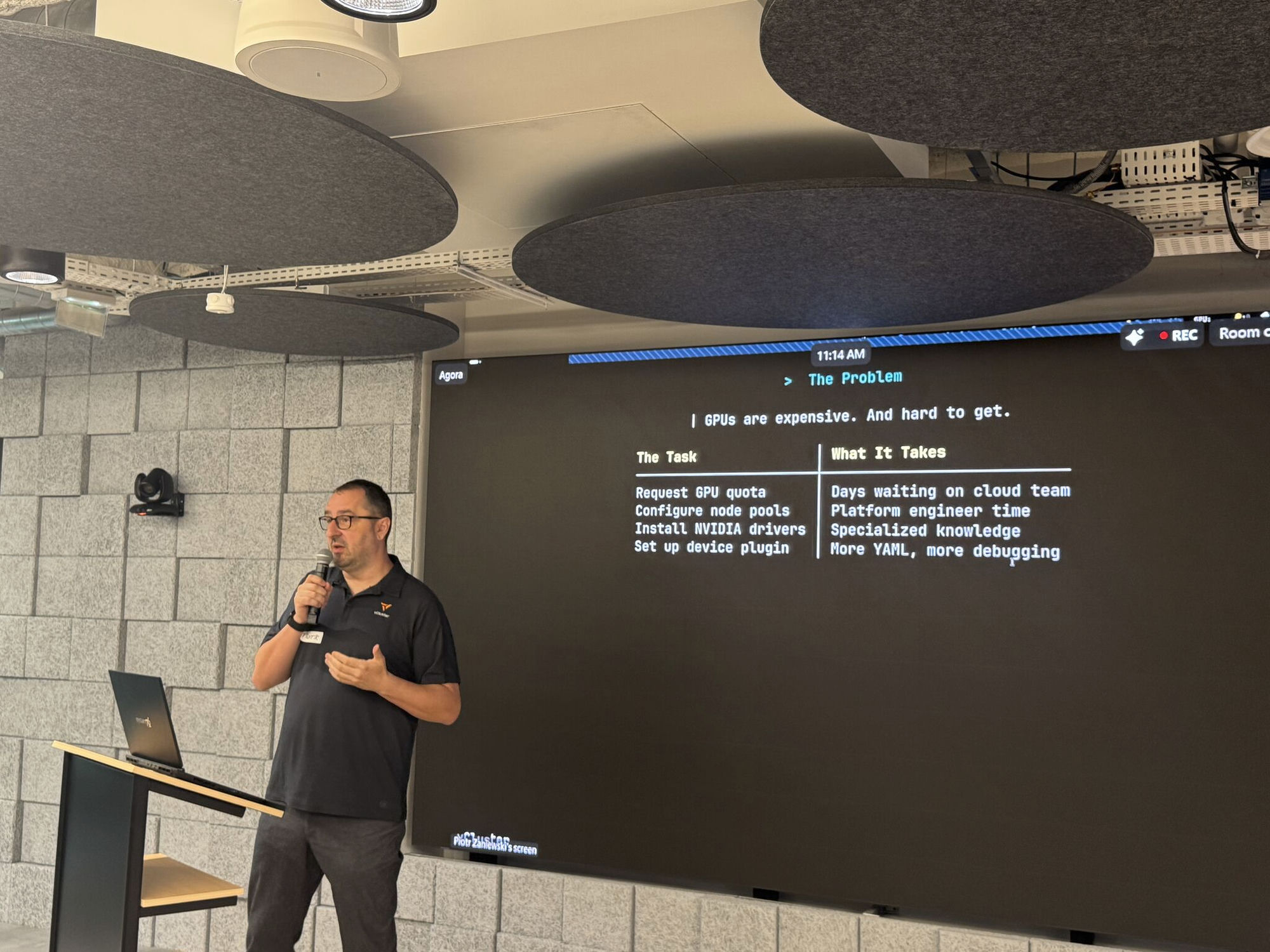
Three Minutes Up, Thirty Seconds Down: Disposable GPU Clusters for AI Devs
Developers can provision GPUs in about three minutes and tear them down in roughly thirty seconds through a kubectl-native experience. The solution combines tenant Kubernetes for isolated RBAC, Karpenter for auto-provisioning, idle policies that collapse nodes quickly, and a tunnel that keeps kubectl compatibility. The talk also covers failure modes like provider drift and credential issues in multi-team setups.
Kubernetes Without the Kubernetes: Local Dev with vind
What if you could run a complete, production-compatible Kubernetes cluster without any Kubernetes? vind (vCluster in Docker) creates fully functional Kubernetes environments using only Docker containers—no host cluster, no kind, no minikube. This talk explores how vind reimagines local Kubernetes development with zero image management via pull-through registry proxy, working LoadBalancers reachable from localhost, multi-node simulation, and external node joining via VPN for hybrid testing.
Automating GPU Environments with vCluster
Live stream demo showing how to automate on-demand GPU environments with Auto Nodes and the vCluster Platform Free Tier. Covers automating GPU-capable Kubernetes environments, using the vCluster Platform Free Tier, and a live implementation walkthrough with Q&A.
Flexible Kubernetes Multitenancy with vCluster
In this session, we'll explore how to implement flexible multitenancy in Kubernetes using vCluster. You'll learn how to design platforms that can adapt to different isolation requirements, resource sharing needs, and trust models within a single cluster. We'll explore: - Multitenancy Spectrum: Understanding the three dimensions of multitenancy - isolation levels (physical/logical/none), resource sharing (dedicated/pooled/shared), and trust boundaries (zero/partial/full) - Flexibility in Practice: How to mix and match different multitenancy models for different teams and workloads - vCluster Deep Dive: How virtual clusters enable this flexibility while maintaining strong isolation boundaries - Real-World Scenarios: Live demo showing how to implement different multitenancy patterns based on actual use cases
GPU Sharing at Scale: vCluster + NVIDIA KAI Scheduler
Kubernetes offers many ways to share GPUs, but a single, cluster-wide scheduler often forces trade-offs between utilization, stability, and team autonomy. This talk shows how vCluster makes the NVIDIA Kubernetes AI Scheduler (KAI) run as an opt-in service for each tenant—so platform teams can raise GPU density while keeping operations predictable. What We'll Cover: Problem statement – why mixed workloads leave GPUs under-used and complicate on-call; vCluster fundamentals – lightweight control planes that isolate scheduling logic, not hardware; KAI at a glance – fractional GPU allocation, gang queues, topology awareness; Live demonstration – two vClusters on one host. Key Takeaways: A reproducible pattern for running different schedulers side-by-side; Practical steps to increase GPU utilisation without adding more clusters; An isolation model that lets teams experiment safely. Why It Matters: As GPU demand grows, platform engineers must balance cost efficiency with reliability. Combining vCluster and KAI delivers both—turning idle accelerators into productive capacity while preserving operational control.
Workshop: Introduction to vCluster: Building Internal Developer Platforms
The workshop introduces participants to vCluster, demonstrating how to create and manage virtual Kubernetes environments for multiple development teams. Attendees will learn to use vCluster effectively, starting with basic setups and progressing to more advanced configurations. Throughout the workshop, participants will take on the perspective of a platform engineering team, making decisions and implementing solutions to serve the needs of various development groups within an organization. Key Focus Areas: Introduction to vCluster and virtual Kubernetes clusters; Setting up and configuring virtual Kubernetes clusters; Managing multiple development environments; Implementing shared services and optimizing resources; Enhancing developer workflows with self-service provisioning. Participants will: Set up and configure virtual Kubernetes clusters; Learn to manage multiple team environments efficiently; Explore resource optimization and cost reduction strategies; Implement progressive improvements to virtual cluster setups; Understand vCluster's role in enhancing developer productivity.
Instant KAI Sandboxes with vCluster: Multi-Tenant, Multi-Scheduler GPU Sharing
Learn how to create instant Kubernetes AI (KAI) sandboxes using vCluster, enabling multi-tenant environments with efficient GPU sharing across multiple schedulers. This talk explores practical patterns for providing isolated AI/ML development environments while maximizing GPU utilization through advanced scheduling techniques.
Keynote: Flexible Kubernetes Multitenancy with vCluster
In this session, we'll explore how to implement flexible multitenancy in Kubernetes using vCluster. You'll learn how to design platforms that can adapt to different isolation requirements, resource sharing needs, and trust models within a single cluster. We'll explore: Multitenancy Spectrum - Understanding the three dimensions of multitenancy (isolation levels, resource sharing, trust boundaries); Flexibility in Practice - How to mix and match different multitenancy models for different teams and workloads; vCluster Deep Dive - How virtual clusters enable this flexibility while maintaining strong isolation boundaries; Real-World Scenarios - Live demo showing how to implement different multitenancy patterns based on actual use cases.
Introduction to vCluster: Building Internal Developer Platforms
How to build cloud native platforms with Kubernetes
Building cloud native developer platforms using vcluster for team isolation while sharing common resources. The talk covers creating self-service portals, leveraging APIs, and automating workflows to enhance productivity and reliability. Interactive demo showcasing how to set up and manage virtual clusters for development teams.
How to Build Cloud Native Platforms with Kubernetes
In this talk, I will explore how to build cloud-native platforms using Kubernetes. I will discuss creating self-service portals, leveraging programmatic APIs, and automating workflows to enhance productivity and reliability.

How to Build a Kubernetes Platform with vCluster
In this hands-on workshop, you will learn how to create and maintain well-architected Kubernetes platforms. We will start with creating virtual clusters for every team and work our way to installing other components on top of them to create a platform. Platform Engineering focuses on empowering developers and organizations by creating and maintaining internal software products known as platforms. You will learn how to balance the isolation between teams with sharing and utilizing common resources. This content is valuable for Platform Engineers, Architects, DevOps Specialists, or anyone curious about how platforms can drive innovation and efficiency in development.
Building Multitenant Developer Platforms With vCluster
Platform Engineering focuses on empowering developers and organizations by creating and maintaining internal software products known as platforms. In this talk, we will explore how to create multi-tenant, well-architected infrastructure platforms using vCluster.
How to build cloud native platforms with Kubernetes
Platform Engineering focuses on empowering developers and organizations by creating and maintaining internal software products known as platforms. In this talk, we will explore what platforms are, why they are important, and uncover best practices for creating and maintaining well-architected platforms.
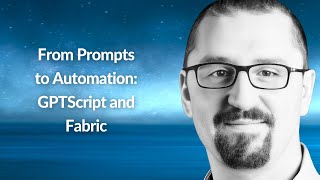
From Prompts to Automation: GPTScript and Fabric
Unlock the power of GPTScript—turn your prompts into full-fledged automation! From running CLI commands to managing APIs, GPTScript lets you control your workflows using plain language. Join my talk to see how this game-changing tool makes complex tasks effortless.

How to build cloud native platforms with Kubernetes
Platform Engineering focuses on empowering developers and organizations by creating and maintaining internal software products known as platforms. In this talk, we will explore what platforms are, why they are important, and uncover best practices for creating and maintaining well-architected platforms.
The Architecture of Developer Platforms
Internal Developer Platforms become more and more popular. There are many kinds of platforms; software focused, security, cost management and infrastructure. This talk focuses on best practices of architecting infrastructure focused developer platforms. The talk covers: what is an infrastructure focused developer platform, how to measure its success, how to avoid common design mistakes, what are emerging architectural patterns for designing those platforms, what tools can help in the design process, and how to use an internal platform. I work on a day-to-day basis with designing, testing and maintaining infrastructure platforms.
Introduction to vCluster: Building Internal Developer Platforms
The workshop introduces participants to vCluster, demonstrating how to create and manage virtual Kubernetes environments for multiple development teams. Attendees will learn to use vCluster effectively, starting with basic setups and progressing to more advanced configurations. Throughout the workshop, participants will take on the perspective of a platform engineering team, making decisions and implementing solutions to serve the needs of various development groups within an organization.

How to Build Cloud-Native Platforms with Kubernetes
Platform Engineering and SRE focus on empowering developers and organizations by creating and maintaining internal software products known as platforms. In this blog, we will explore what platforms are, why they are important, and uncover best practices for well-architected platforms.

How to Learn Cloud Native Technologies Using AI
Are you struggling to learn Kubernetes or other CNCF technologies? You're not alone! Kubernetes can be complex, but with the power of AI, mastering it becomes much easier. In this video, we'll show you how AI tools, like Flowise, can help you understand Kubernetes faster and more effectively.

Kubernetes Certifications: How to Take Your Career to Next Level
Some say that Kubernetes is a fabric for cloud native applications, platform to build platforms or operating system of the cloud. Well, all of those statements are true, but most importantly, Kubernetes is everywhere and its popularity will only grow, as it fades to the background powering workloads on servers in public, private and hybrid clouds, on edge and even in space. Big part of DevOps movement is 'learning culture'. Companies expect more from new and seasoned employees, technologies come and go with neck breaking speed. One proven way of continuously learning is investing in yourself by learning and validating your knowledge with a certificate. CNCF created 3 Kubernetes certifications, one for administrators: CKA, for developers: CKAD and security specialists: CKS. During this talk we will look into learning process, certification details and I will share with you tips and tricks on how to pass the exams.
How to create and maintain good software documentation
Let's define desired characteristics of software documentation to fit into modern, rapid pace of development. Documentation should be Simple to decrease maintenance effort and make sure all stakeholders can understand the core concepts. Holistic to account for different types of documentation consumers requiring different contexts. Automated to ensure maintenance over time with minimal impact on development teams. Reusable across software projects with a structured but flexible documentation model. Portable to generate and distribute documentation independently on any hosting medium.